
English| EUR
Suggested for you
More currencies
Choose a language
Venice keeps its darker folklore in plain sight — on plague islands, bricked-up doorways and canal bends named after the dead. This page maps the legends to real addresses in the lagoon and explains which ones hold up against the archives. Read it as a venice ghost stories guide before you walk the sestieri after dark.
Quick answer
The settings for these tales cost nothing: access is 0 EUR, free access to public streets and squares where stories take place, and those streets stay open 00:00–23:59, seven days a week. The address is simply Venice, Italy. The caveat is atmosphere rather than access — most of the narrow calli only feel the part once the day-trip crowds thin out.
Venice buried its plague dead on islands, not in the city — and that single act of quarantine engineering produced most of the lagoon's supernatural literature. Poveglia and Lazzaretto Vecchio absorbed thousands of bodies in the outbreaks of 1348, 1576 and 1630, and their names still anchor the darkest venice ghost stories told on the water today. The tales that circulate now are layered: medieval chronicle, Venetian oral tradition, and a thick coat of twentieth-century embellishment that guides are usually careful to separate out. What the reader is actually dealing with is a geography, not a single site. The legends are distributed across the six sestieri and the outer islands, and each has a fixed address. Cannaregio carries the tale of the Ca' Dario, the Gothic palazzo on the Grand Canal whose owners met unlucky ends often enough to earn a nickname. Castello holds the story of the bricked-up window near Campo San Zaccaria. Dorsoduro contributes the Ponte dei Pugni brawls and the drowned bodies said to surface at the Zattere. San Polo has the Ponte delle Tette and the courtesan quarter. A Venezia infestata walking route — a Venice haunted walking tour in the descriptive sense — usually strings four or five of these together rather than fixating on one. The context that makes this material coherent is Venetian record-keeping. The Republic documented its plague ordinances, its executions between the two columns of the Piazzetta San Marco, and its inquisition proceedings in the Doge's Palace with bureaucratic thoroughness. That means many haunted-Venice claims can be checked, and the good ones survive checking. The story of the Ponte dei Assassini and the ban on nighttime beards, for instance, sits inside real sumptuary law. What to do with the answer is simple. Treat the folklore as a route planner. Because the canalside squares are public ground, a self-guided circuit costs nothing and can be walked at any hour, though the acqua alta season and summer humidity change the experience considerably. Readers using this as a venice ghost stories guide should pair it with the hours, timing and history sections on this page, then decide whether a guided lagoon crossing to the plague islands — which is not public access — is worth booking separately.
“Venice documented its plague ordinances and its executions with bureaucratic thoroughness, which means many haunted-city claims can be checked — and the good ones survive checking.”
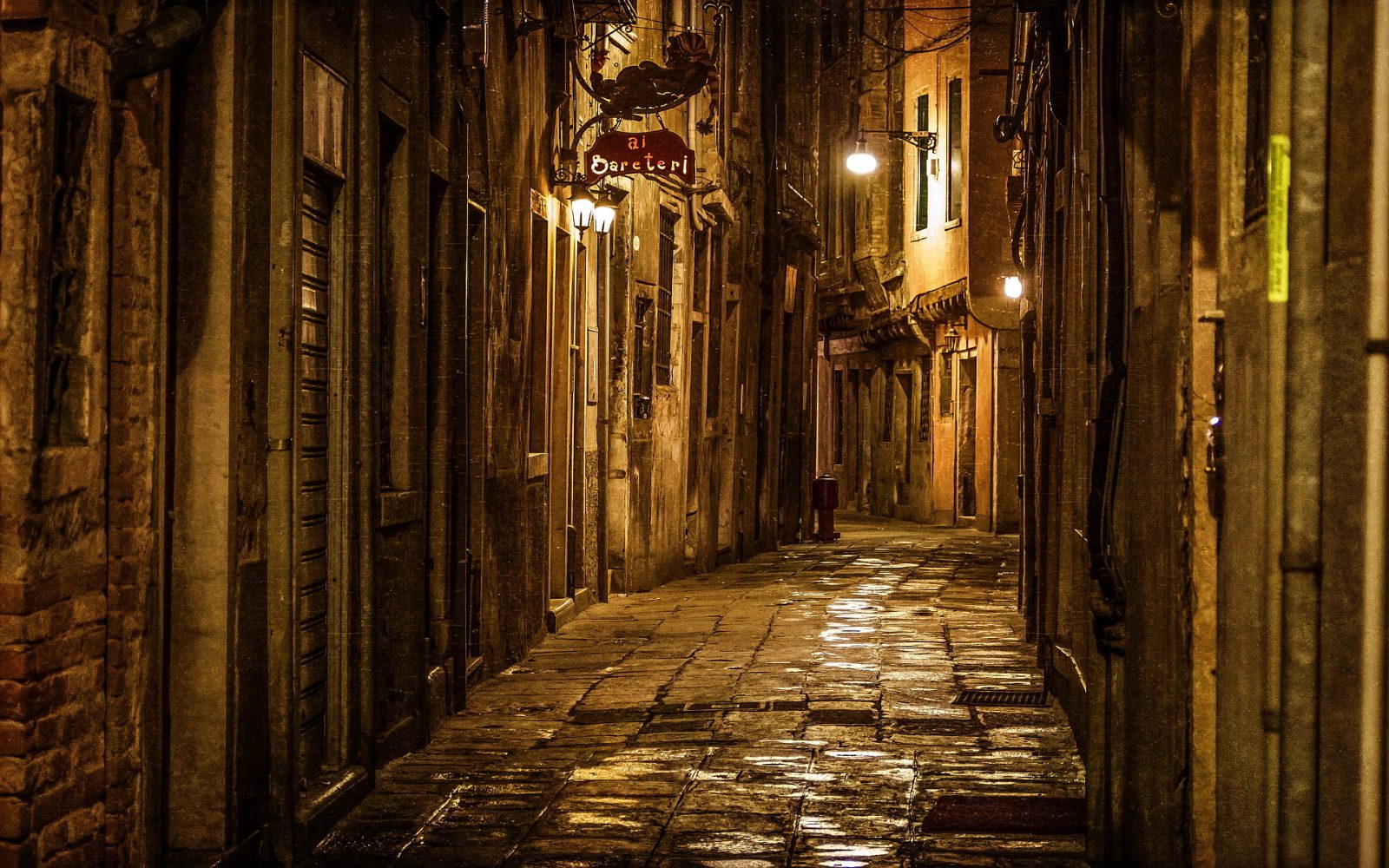
The best arrival window is 20:00–23:00, as the atmospheric conditions are best for ghost stories after dark when crowds diminish. Exploring the narrow, winding calli during these hours allows for the intended eerie experience.
Cool and damp, 5–10°C
Fog often descends on the canals, enhancing the visibility of historical settings.
Cold, frequently below 5°C
Minimal ambient noise provides an ideal environment for listening to folklore.
Mild temperatures, 15–20°C
Pleasant for walking, though busier; evening hours remain essential for the ghost tour atmosphere.
Warm, 25–30°C
Late evening remains the only time to escape the heat and heavy daytime pedestrian traffic.
Verdict: The best arrival window for experiencing Venice ghost stories is 20:00–23:00 during the months of November or February when crowds are thinnest.
The public streets and squares where these Venetian ghost stories take place remain accessible to visitors at all times. You are free to explore these historic locations throughout the week.
Venetian hauntings begin with documented catastrophe rather than invention. The Black Death reached the lagoon in 1348 and killed an estimated three-fifths of the population within eighteen months. In 1423 the Republic opened the Lazzaretto Vecchio on a small island near the Lido, the first permanent quarantine hospital in Europe. A second station, the Lazzaretto Nuovo, followed in 1468. Excavations at the Lazzaretto Vecchio between 2004 and 2007 uncovered mass graves holding well over a thousand bodies. Many venice ghost stories trace directly to those islands. Plague returned with force. The outbreak of 1575-1577 took roughly 50,000 lives, among them Titian, who died in August 1576. The Senate answered with a vow, and Andrea Palladio's church of Il Redentore on the Giudecca was begun in 1577 and consecrated in 1592. The epidemic of 1630-1631 killed a further 46,000 and produced Baldassare Longhena's Santa Maria della Salute, laid on more than one million timber piles driven into the mud from 1631 and completed in 1687. Devotional architecture and lagoon folklore grew from the same soil. Secular power supplied the rest. The Piombi cells beneath the roof of the Palazzo Ducale and the damp Pozzi below held prisoners of the Council of Ten; Giacomo Casanova escaped from the Piombi on the night of 31 October 1755. The Ponte dei Sospiri, built around 1600 by Antonio Contin, carried the condemned toward those cells. Between the two columns of the Piazzetta, executions were staged until 1752, and Venetians still avoid walking between them. What survives is legible on foot. The Salute dome, the Redentore facade, the narrow calli of Cannaregio around the 1516 Ghetto, and the closed islands visible across the water anchor venice ghost stories to verifiable ground. A Venice ghost walk simply follows the record.
Black Death reaches the lagoon and kills an estimated three-fifths of Venice's population.
The Republic opens the Lazzaretto Vecchio near the Lido as Europe's first permanent quarantine island.
The Senate confines Jewish residents to the Ghetto Nuovo in Cannaregio, creating Europe's first ghetto.
Plague kills roughly 50,000 Venetians, including the painter Titian, who dies in August.
Palladio's votive church of Il Redentore on the Giudecca is consecrated after the 1577 vow.
Construction of Santa Maria della Salute begins on over a million timber piles after 46,000 plague deaths.
The last public executions are carried out between the two columns of the Piazzetta San Marco.
Casanova escapes the Piombi prison cells beneath the roof of the Palazzo Ducale on 31 October.
Venice holds a rich collection of folklore rooted in its long history of isolation and maritime trade. Many of these narratives are tied to specific districts and landmarks that remain accessible today.
Often referred to as a place of plague quarantine, this island is associated with local legends regarding the souls of those who perished there during various outbreaks.
According to Venetian folklore, the ghost of Fosco Loredan is said to wander the Ca' Loredan palace carrying the severed head of his wife, Elena, whom he killed in a fit of jealousy.
Local tradition tells of a baker named Biagio who was executed for a crime; his spirit is said to remain near the street, which was renamed to commemorate the somber event.
Legends suggest the palace is haunted by a noblewoman who met a tragic end, with visitors occasionally reporting unexplained phenomena near the site.
Stories persist of a spirit searching for a lost partner near the bridge, reflecting recurring themes of separation found in Venetian urban legends.
Legends recount the sighting of a nun in the historic Ghetto area, often interpreted by locals as a manifestation of historical grievances.
Everything you need to know about venice ghost stories
Many Venetian legends are rooted in the city's complex history, involving real figures and tragic occurrences from past centuries. These narratives often blend documented events with local folklore to explain the mysterious atmosphere found in forgotten corners.
The best arrival window is 20:00–23:00, as the atmospheric qualities of the city are most pronounced after dark. During these hours, the daytime crowds diminish, allowing for a more immersive experience within the silent alleyways.
There is an entrance fee of 0 EUR for access to public streets and squares where these tales are traditionally told. While the city streets are free, many visitors choose to join organized tours to gain deeper insight into the local mythology.
While these macabre narratives are compelling, they often contain themes of death, betrayal, or sorrow that may not be suitable for young children. Parents should exercise discretion and consider the intensity of the stories before planning an outing through the dark winding passages.
When wandering to uncover city hauntings, it is helpful to wear comfortable walking shoes to navigate the stone bridges and uneven paths. Bringing a flashlight can also be useful for identifying architectural details that remain hidden in the shadows of the labyrinthine streets.
Yes, you can explore the locations associated with these legends independently by walking through public areas at your own pace. However, local folklore guides can provide a richer experience by connecting specific sites to the historical architecture of the lagoon city.